
A radiator disappears. The wood stays.
A radiator enclosure seems like a small piece of furniture, but in execution design, material and installation come together very precisely.
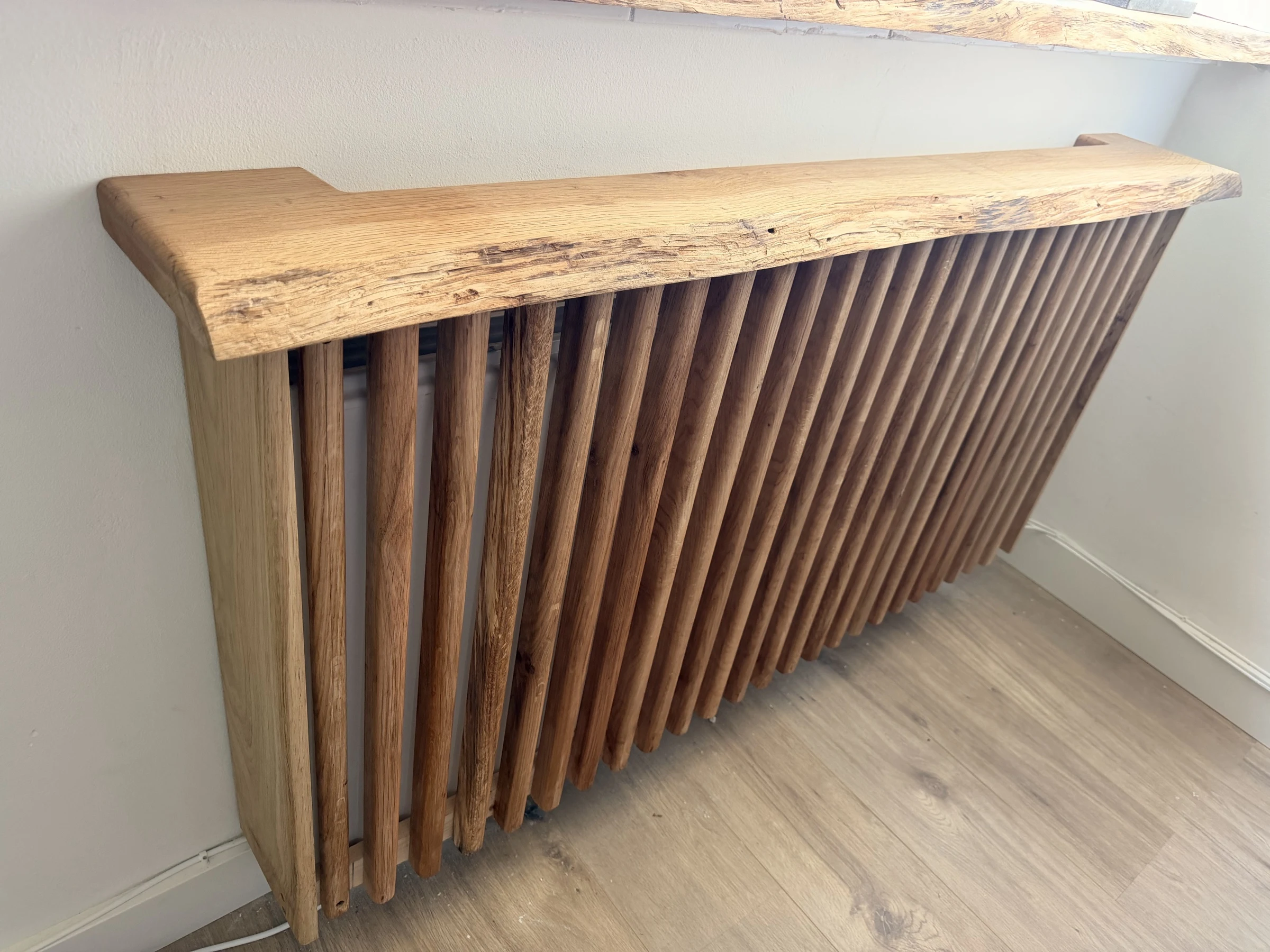
For this radiator below the window I didn't want a standard enclosure, but a piece of furniture that becomes part of the room. The idea is simple: vertical spindles for airflow, a concealed wall mounting and a solid oak top with a natural edge. In execution, the design changed in the places that matter most. That's what made this project interesting.
What the design had to solve
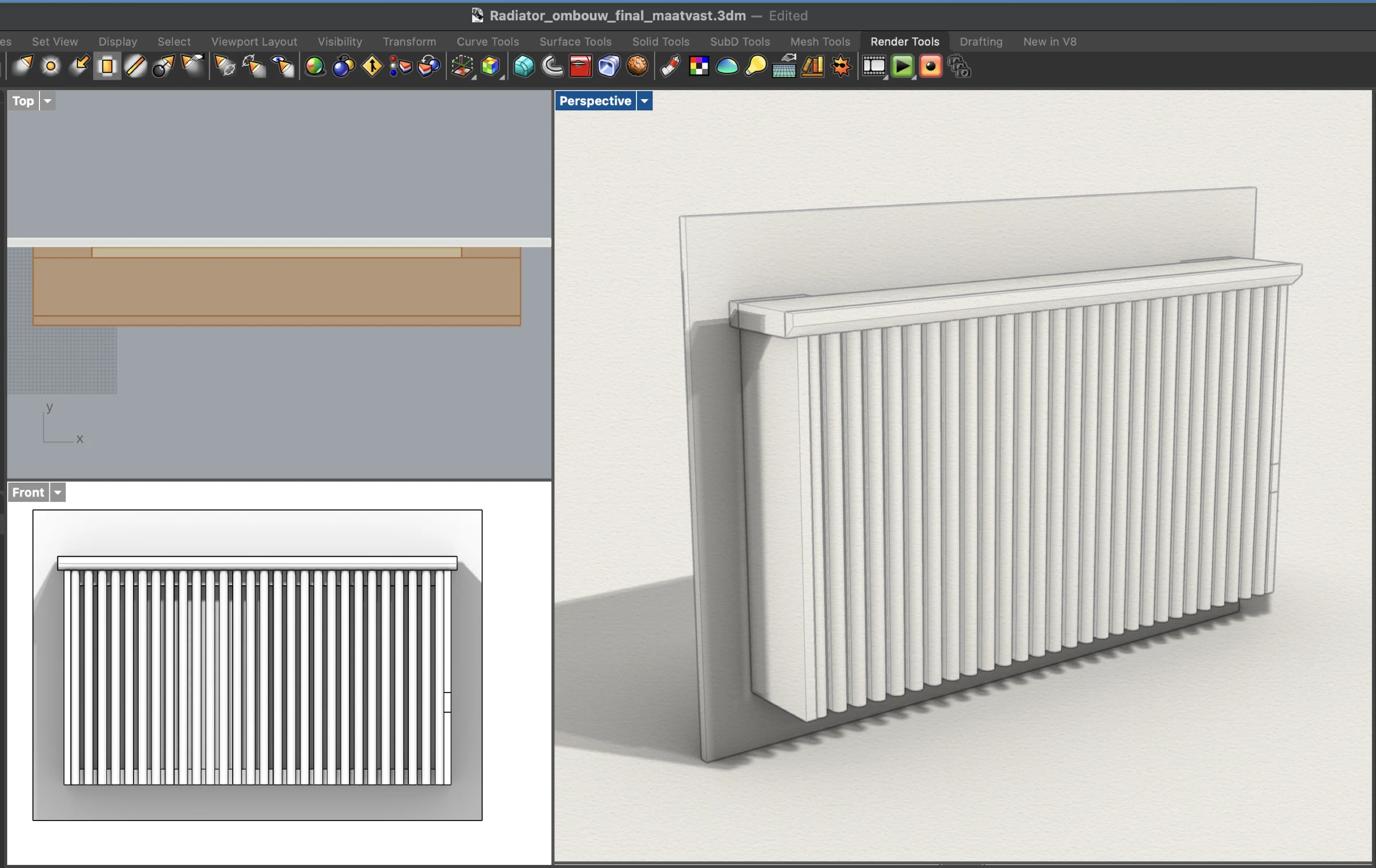
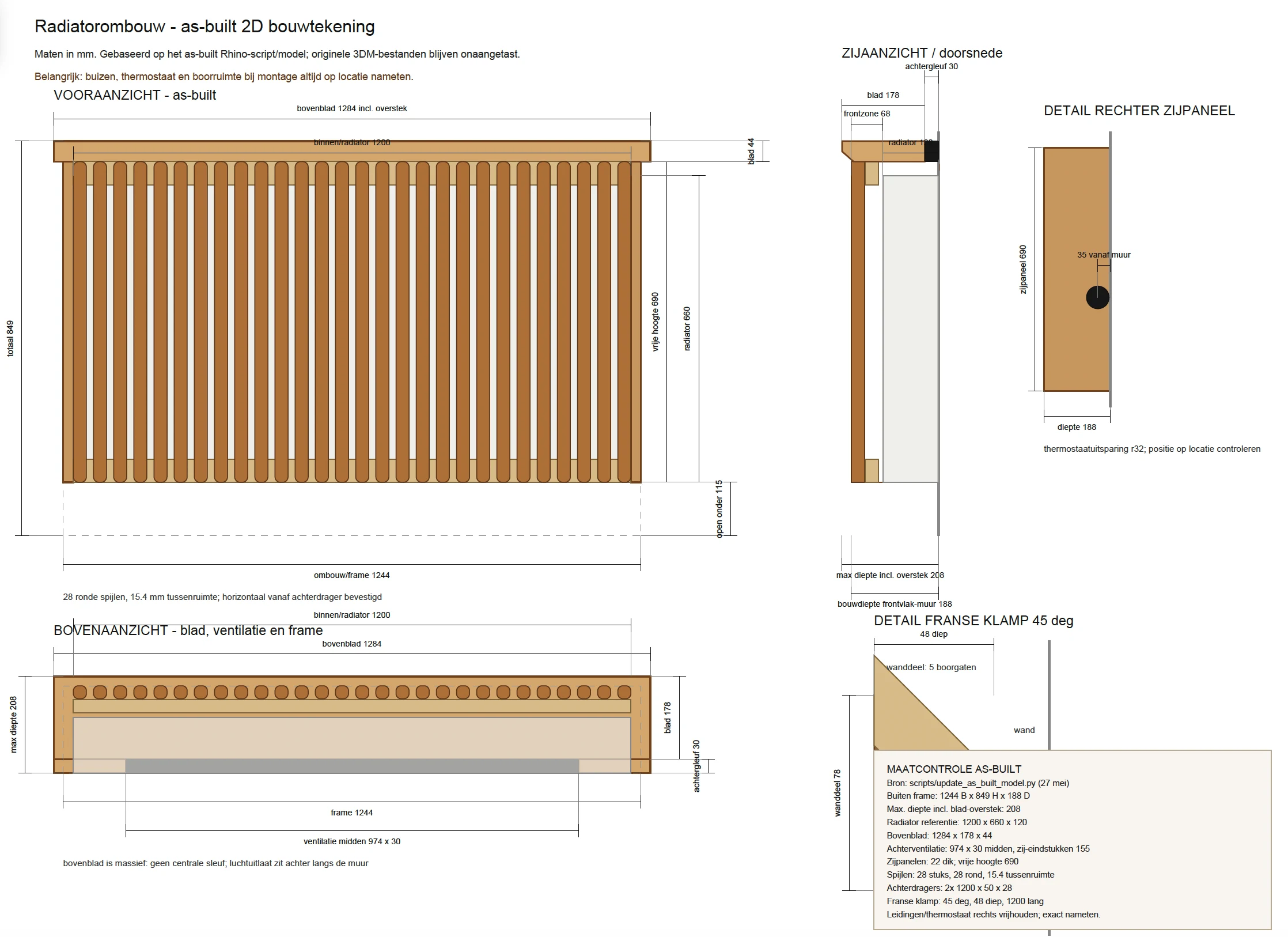
The radiator needed to become visually quieter without losing its function. That's why the front stays open with vertical spindles, and the ventilation gap sits at the rear. In the first design the gap was closer to the centre of the top panel. During the build it moved to the back — the panel now stops 30 mm short of the wall. As a result the top reads as a solid slab from the side, which suits the character of the oak.
What changed during the build
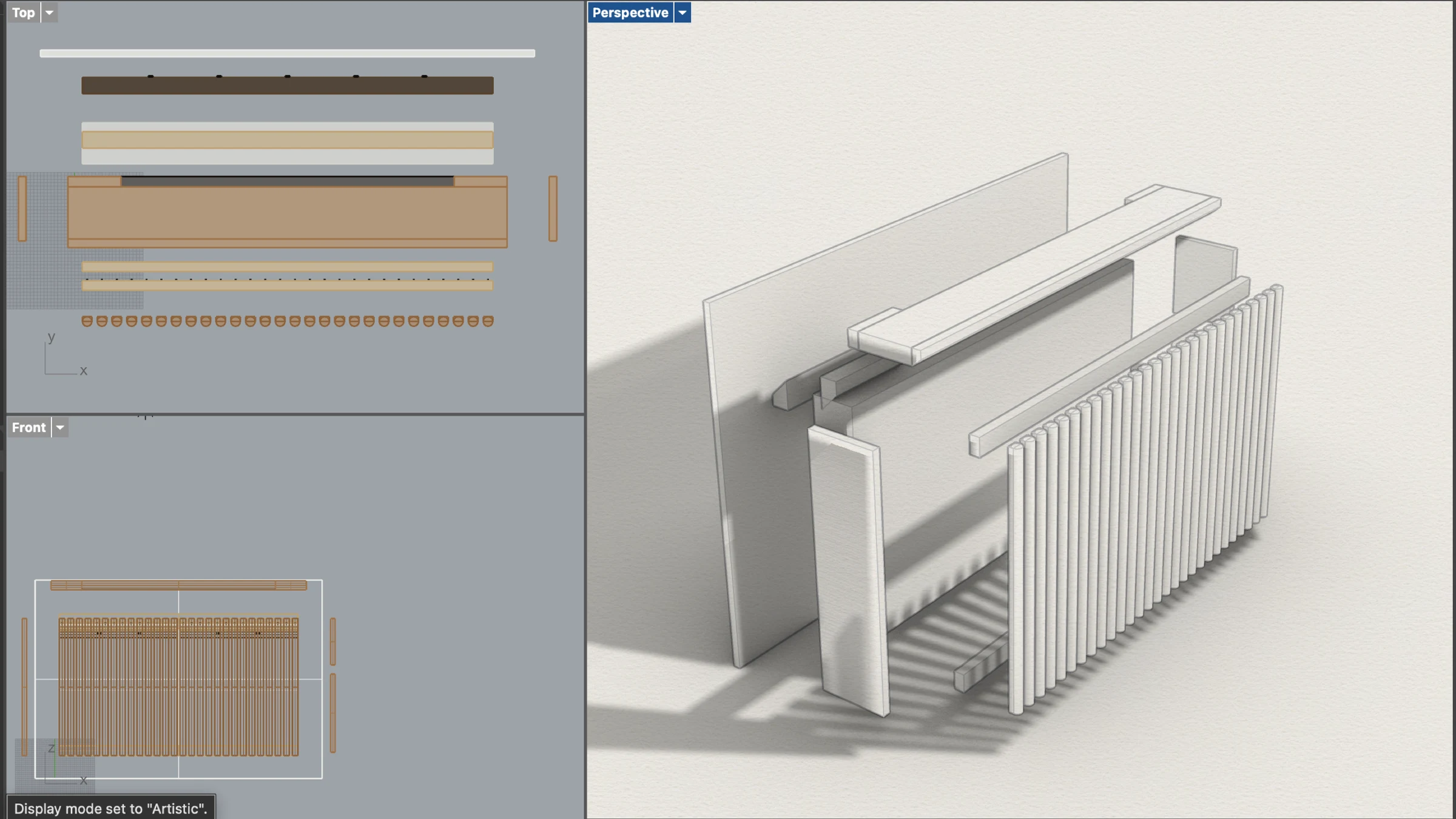
The biggest change is in the top panel. Instead of a flat technical panel it became an overhanging piece of solid oak with a natural edge at the front — almost a window ledge. The spindle construction also changed: the support rails sit vertically at the back, and the spindles are fixed horizontally from the rear. That gave more control, more stiffness and no visible fixings from the front.
The French cleat worked well as a principle, but installation needed more space than planned. To drill into the wall the enclosure had to hang slightly higher than designed. As a result the radiator isn't fully concealed at the bottom. Visually acceptable; next time I'd design around the drilling access and installation sequence from the start.
What works well
The material carries the design. The live edge of the top makes the object less severe and gives the enclosure a warm, almost window-ledge quality. The round oak spindles echo the existing radiator fins but make the image much quieter. Keeping the visible surfaces in oak while using simpler timber for hidden structure is a sound principle — it keeps cost manageable without compromising the result.
What I'd do differently next time
Test the installation height against real drilling access above the radiator before finalising the design. Model the mounting not just as geometry but as an installation sequence. Design the bottom with a little extra tolerance so small height adjustments don't become visible.
Dimensions, materials and the technical drawing are on the project page.