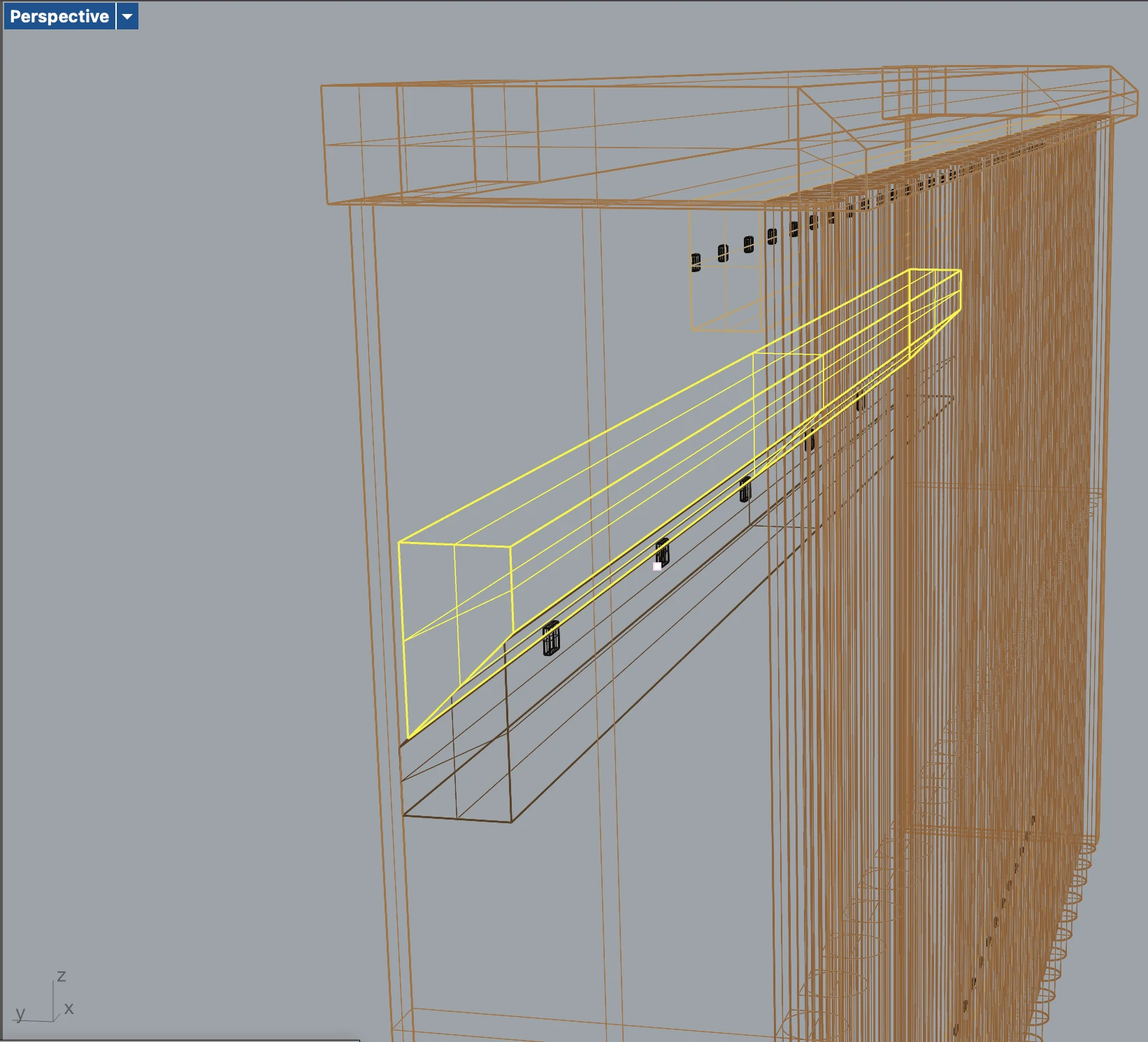
Why the cleat angle went from 25° to 45°
Design is a hypothesis. Only in the workshop did it become clear why the radiator cover mounting needed to change.
The design for the radiator cover started in Rhino. A French cleat at 25° seemed sufficient — stable enough on paper, and compact in profile. But when the first prototype went on the wall, something was off.
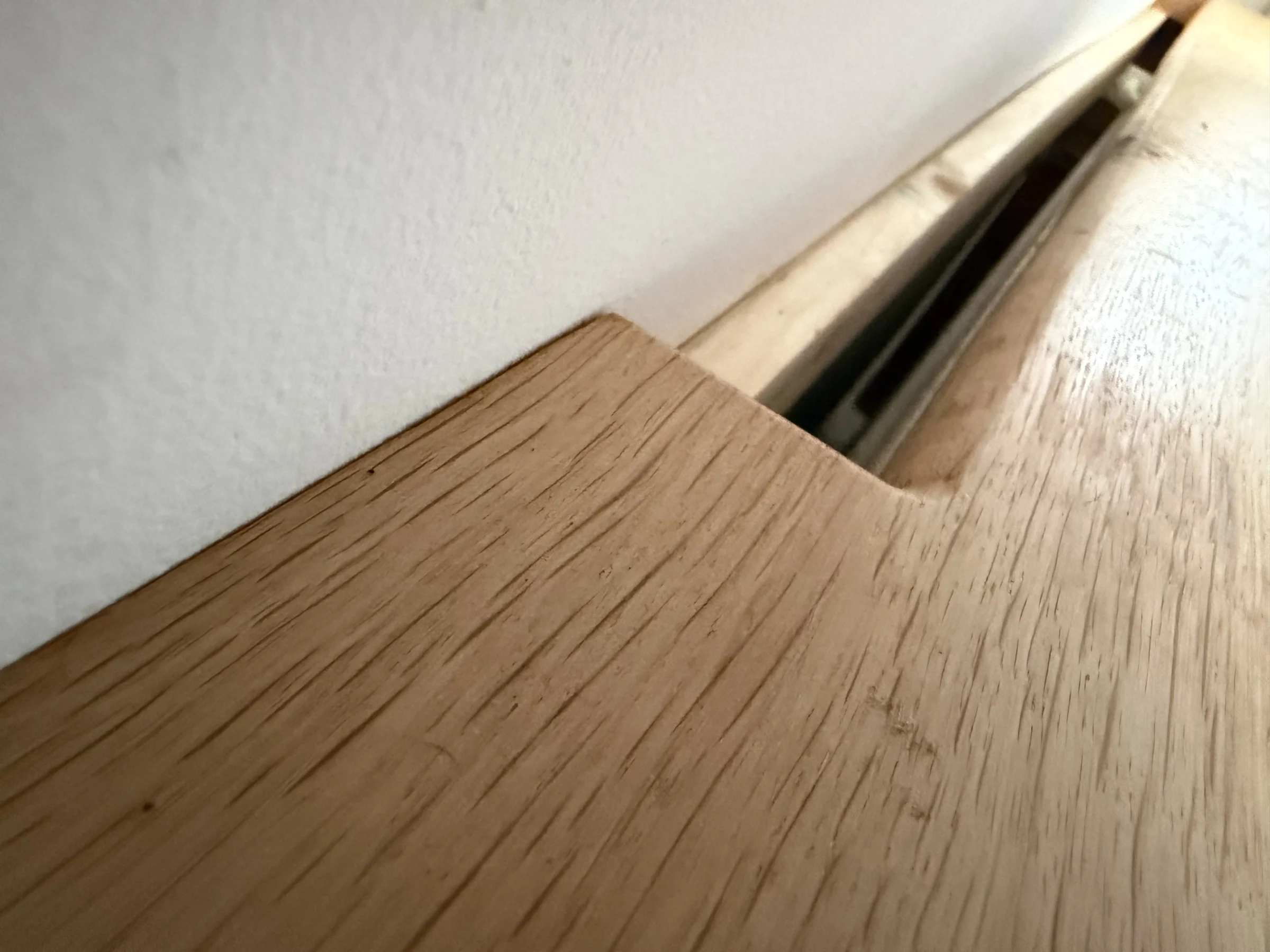
The cover held, but vibrations created a slight play. Not dramatic, but noticeable when touched. The cause: at 25°, self-locking is weaker. The construction relies too much on the weight of the piece itself, not on the geometry of the joint.
The fix was simple. Cleat angle raised to 45°. Together with the drilling clearance needed above the radiator, the cover ended up hanging 25 mm higher than planned. I updated Rhino, printed a new drawing, and rehung it the next day.
The result: no play, even after heating and cooling cycles. The construction now works through geometry, not friction. That is the difference between a solution you accept and one you understand.