
An open radiator cover: 39 slats to the floor
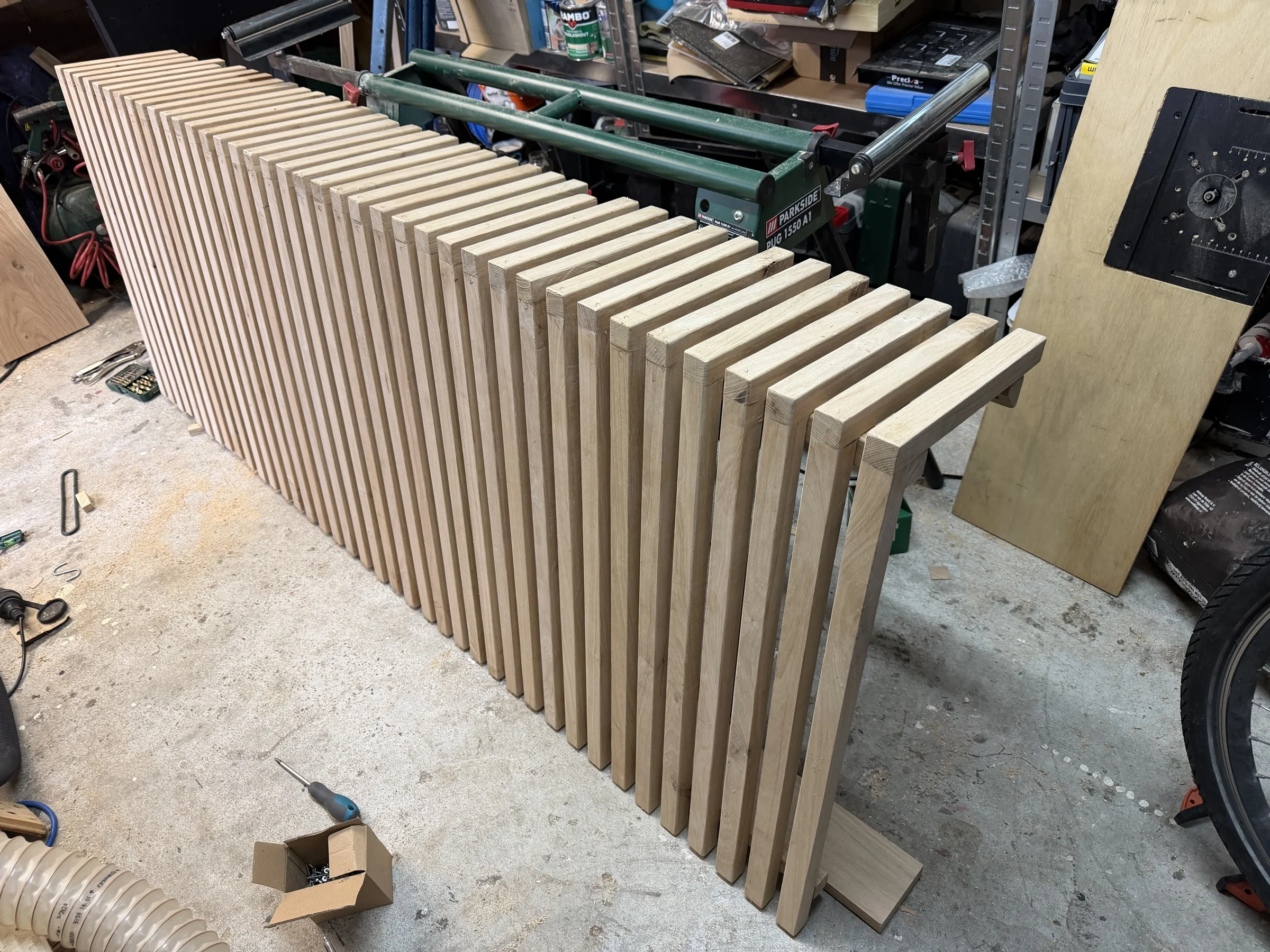
No top, no visible screws. Each slat turns the corner as an L and comes from five boards of 28 mm oak.
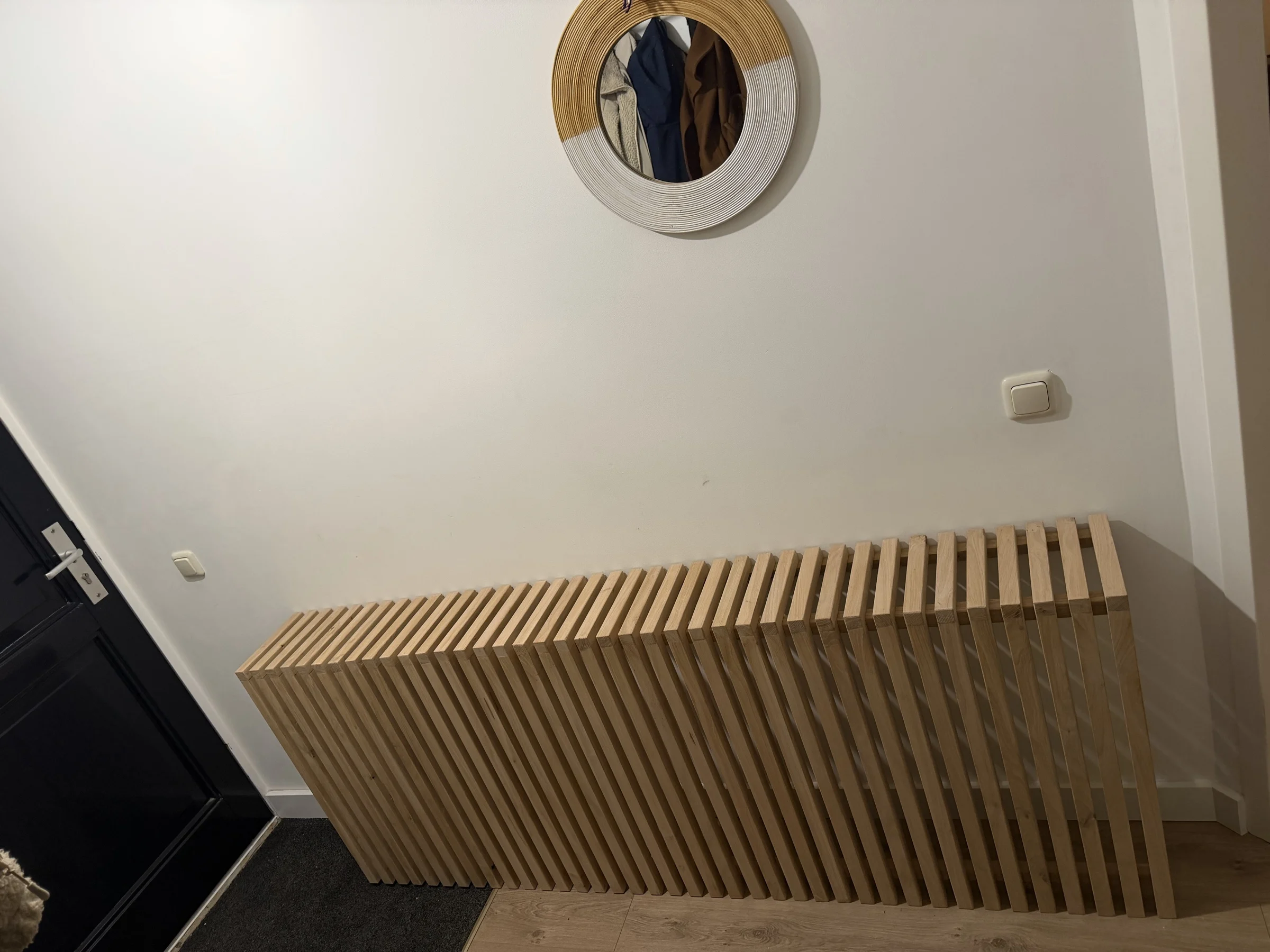
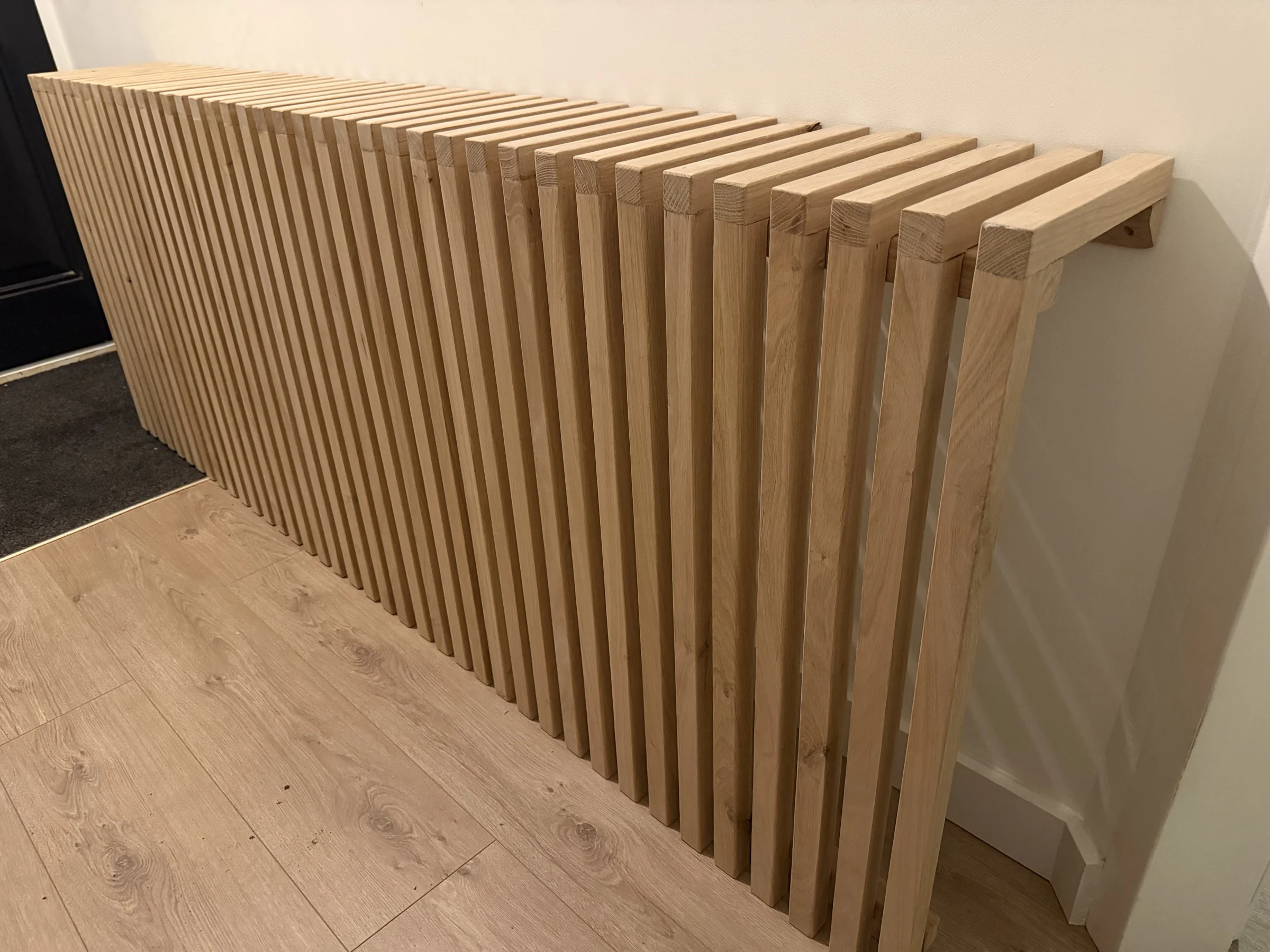
For this radiator in a hallway the client wanted something other than the cover with a top I made earlier. A subwoofer and a shelf sit behind the radiator; both had to stay within reach, and nothing was to rest on top. So the design became an open screen: 39 flat slats of 30 mm, 20 mm apart, running over the top and down to the floor. Overall 194 cm wide, 74.5 cm high and 24 cm deep.
Each slat is an L
A slat here is not a loose strip. Each one consists of an upright of 722 mm and an arm of 243 mm that turns the corner over the top. Both parts come from one continuous piece of timber of 980 mm, so the grain runs round the corner. They are glued with two concealed 6 × 35 mm dowels. There is no screw and no hole on the top.
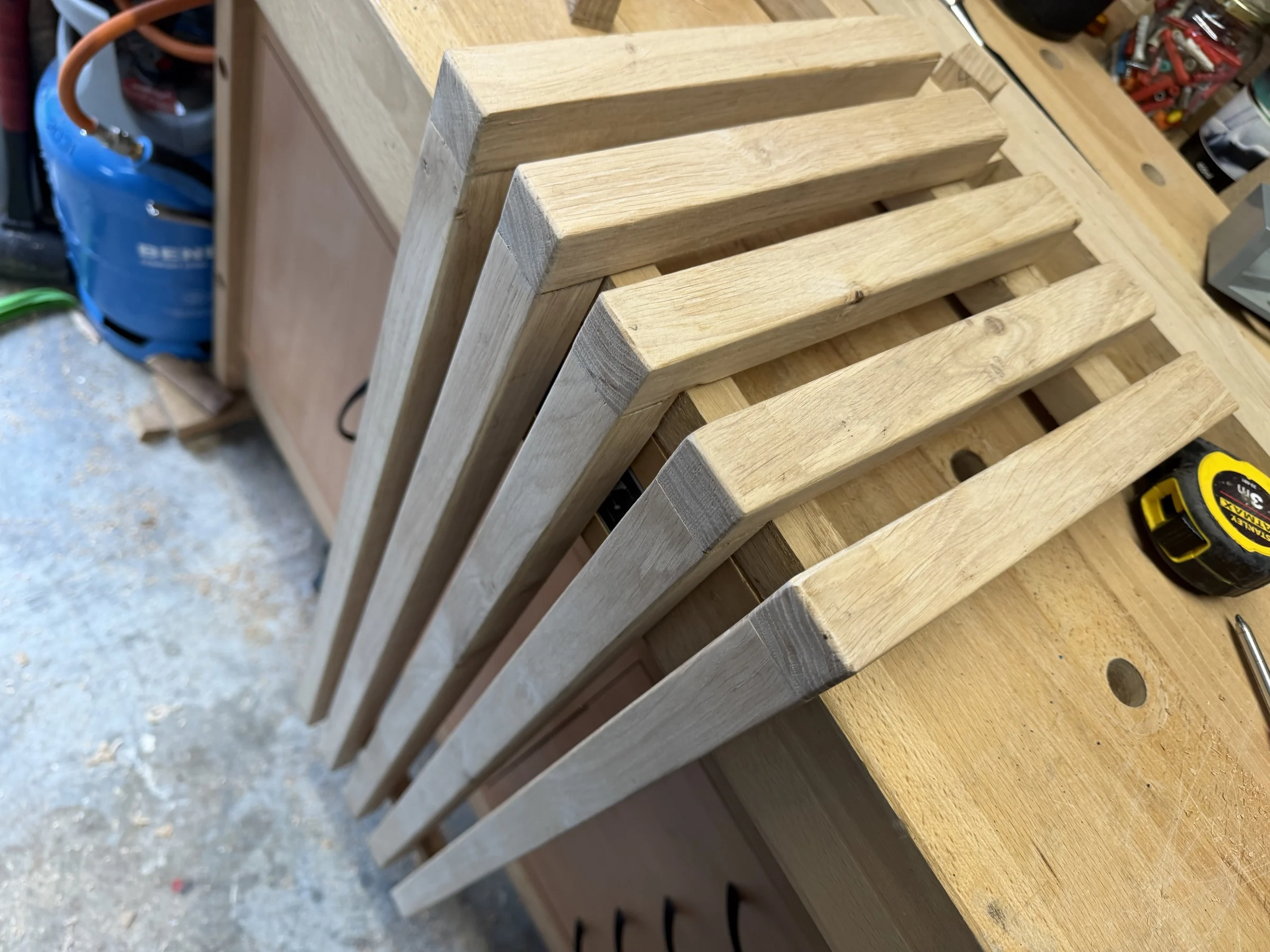
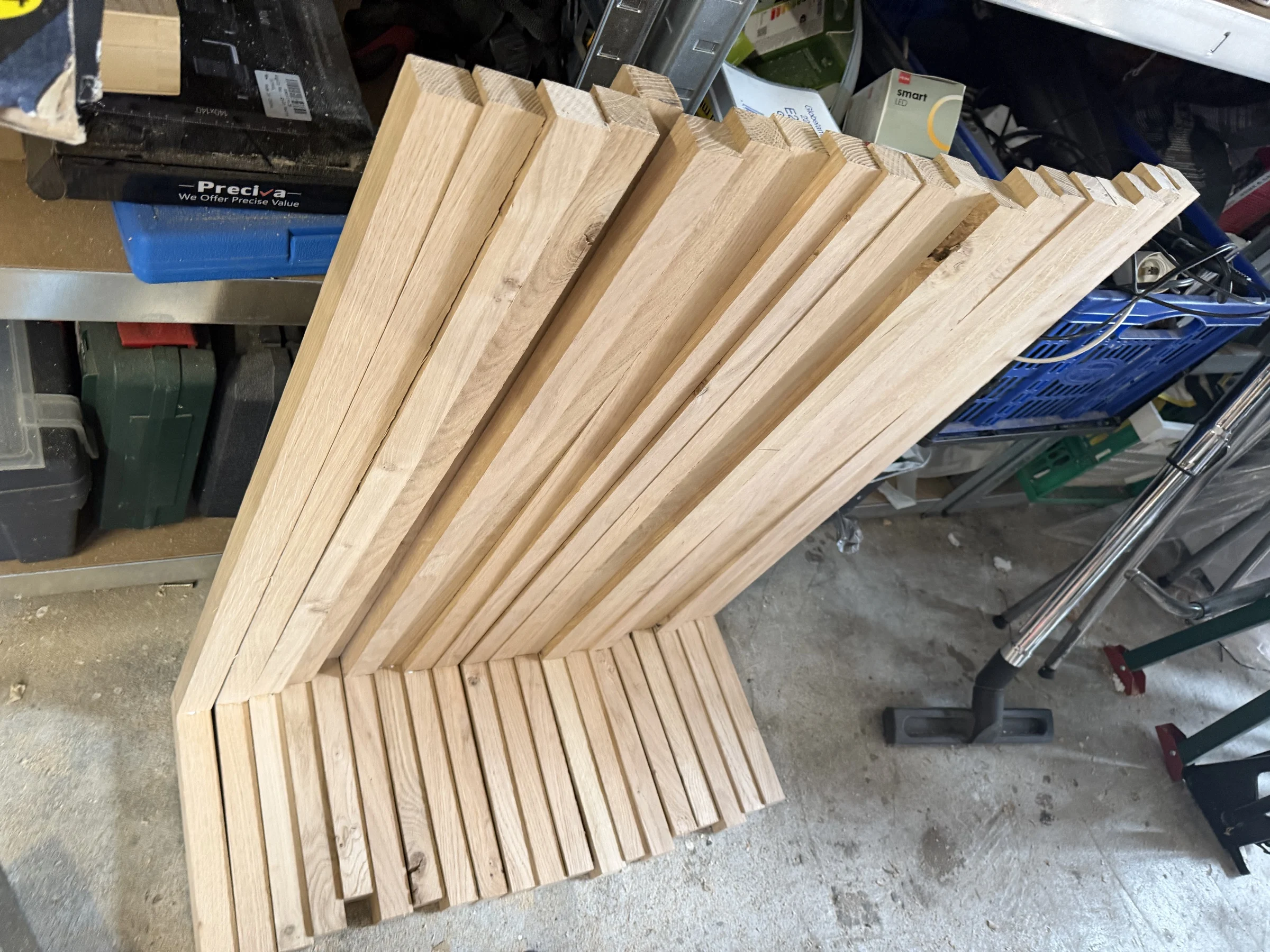
The timber is rustic European oak: five boards of 2500 × 240 × 28 mm. The 28 mm is the depth of the slat; the 30 mm face comes from ripping and planing the edges. The first three L-elements were the trial pieces. If they fitted, they were the first three of the 39.
Two rails and a cleat
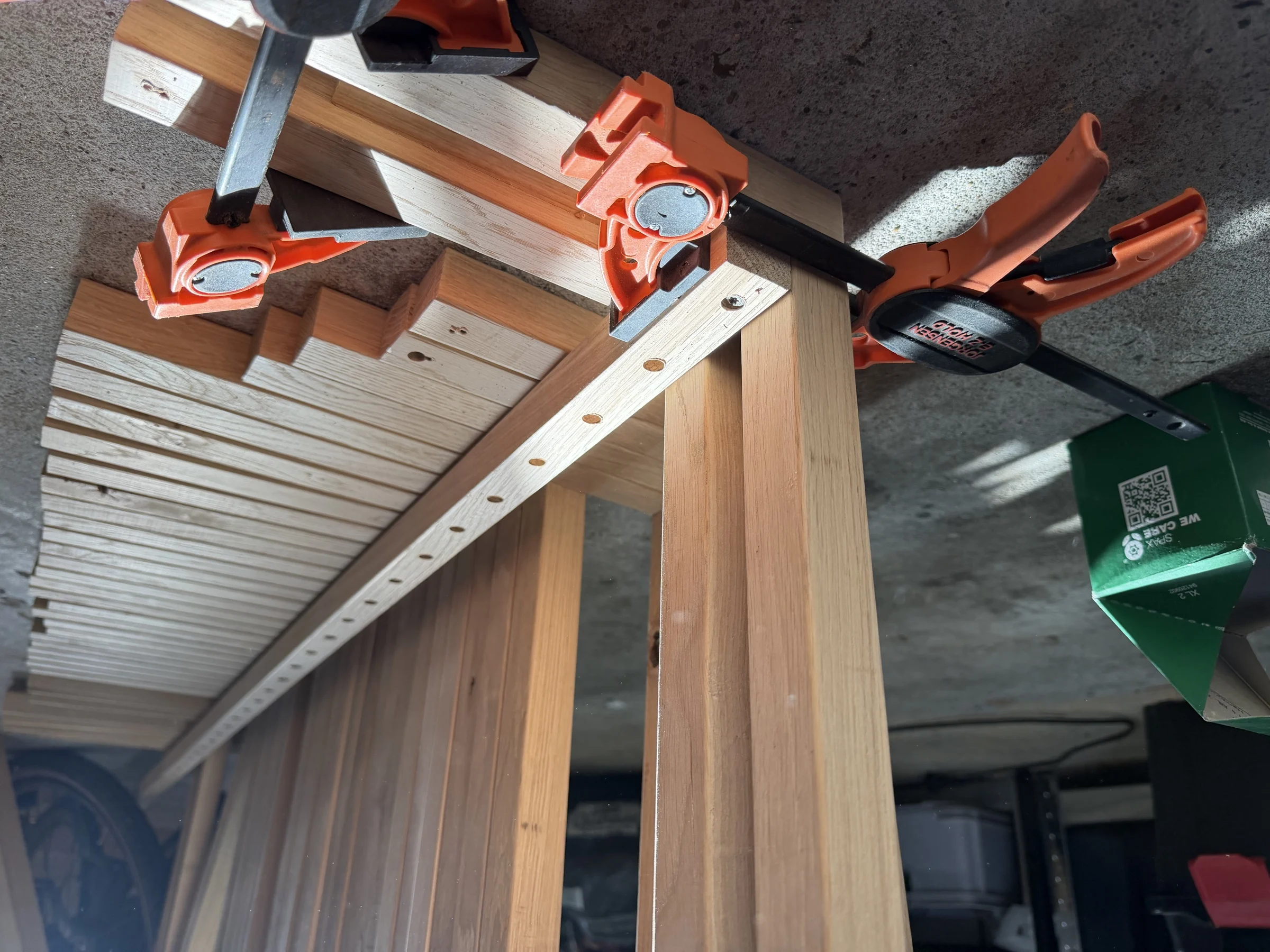
The slats sit on two horizontal rear rails of 50 × 25 mm. Behind those the whole piece hangs on a French cleat against the wall, with three small spacer blocks at the bottom that stay below the radiator. To remove it, lift 30 mm and pull 30 mm forward; for vacuuming, for the thermostat valve, for the subwoofer.
What the dimensions did
The design was 750 mm high and 248 mm deep. The piece came out at 745 by 240, and the width measured 1940 mm instead of 1930. Those are not mistakes but the reality of 39 pieces of timber side by side: half a millimetre per gap adds up. That is why I measure a cover again after the build and record those dimensions before installation.
The result
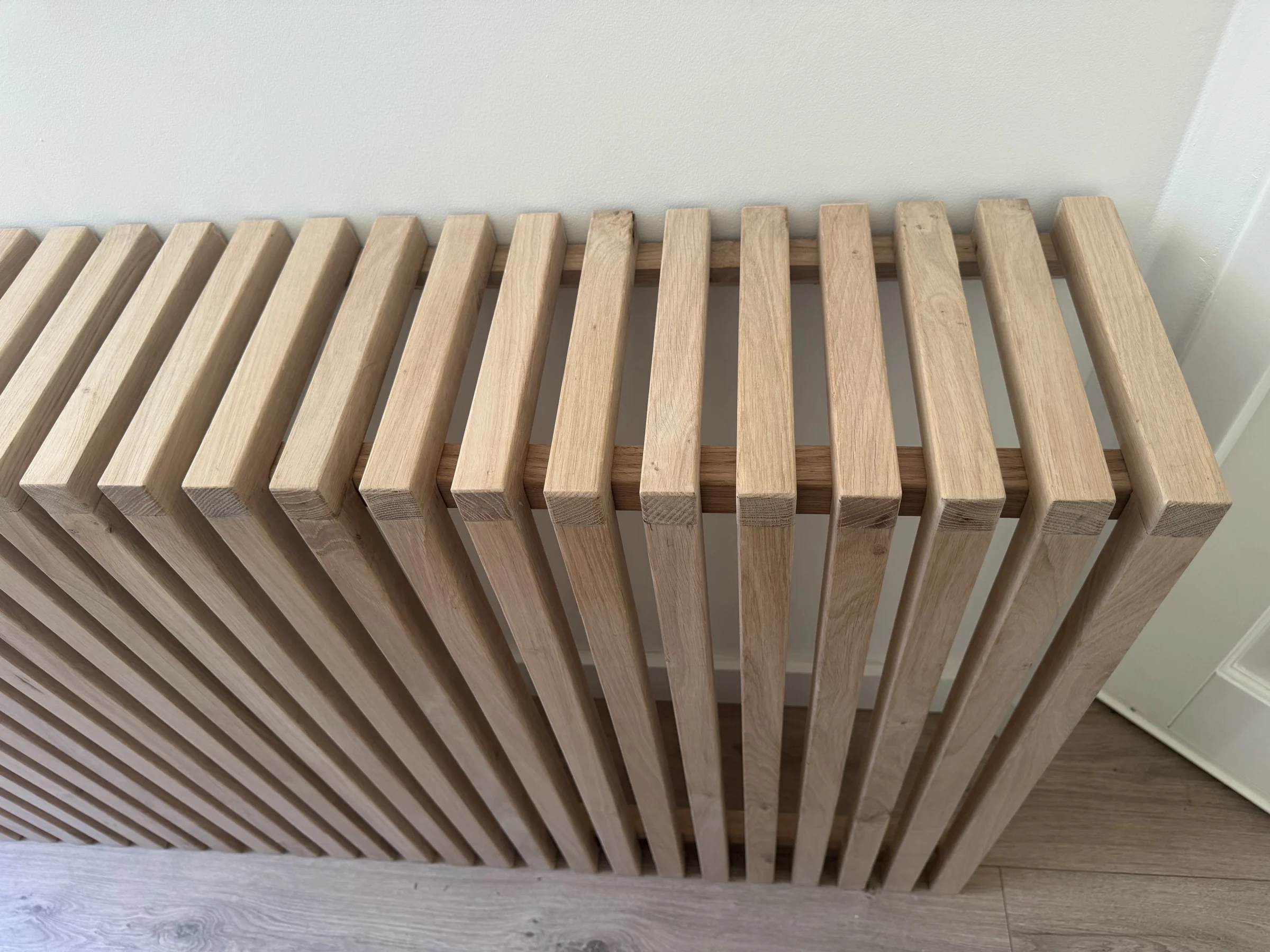
In the hallway the cover reads as one volume of timber. From the front you see the rhythm of the slats; from the side, the corner where each slat turns. The radiator stands behind it, the subwoofer too, and both keep doing what they did.
I make a cover like this to the measurements of the radiator and the room. On the product page you choose the design and request a proposal; the earlier cover with a top is in the portfolio.