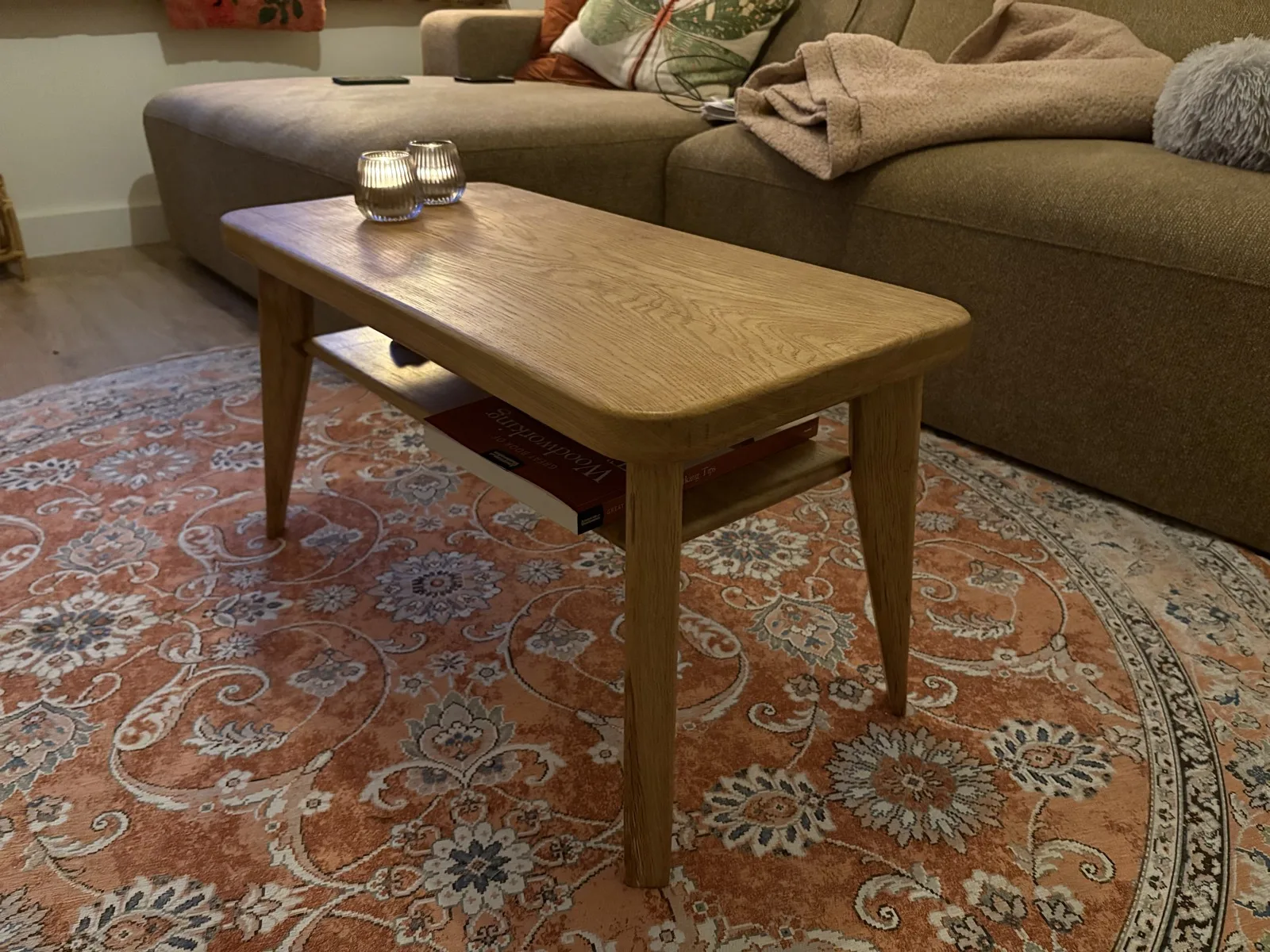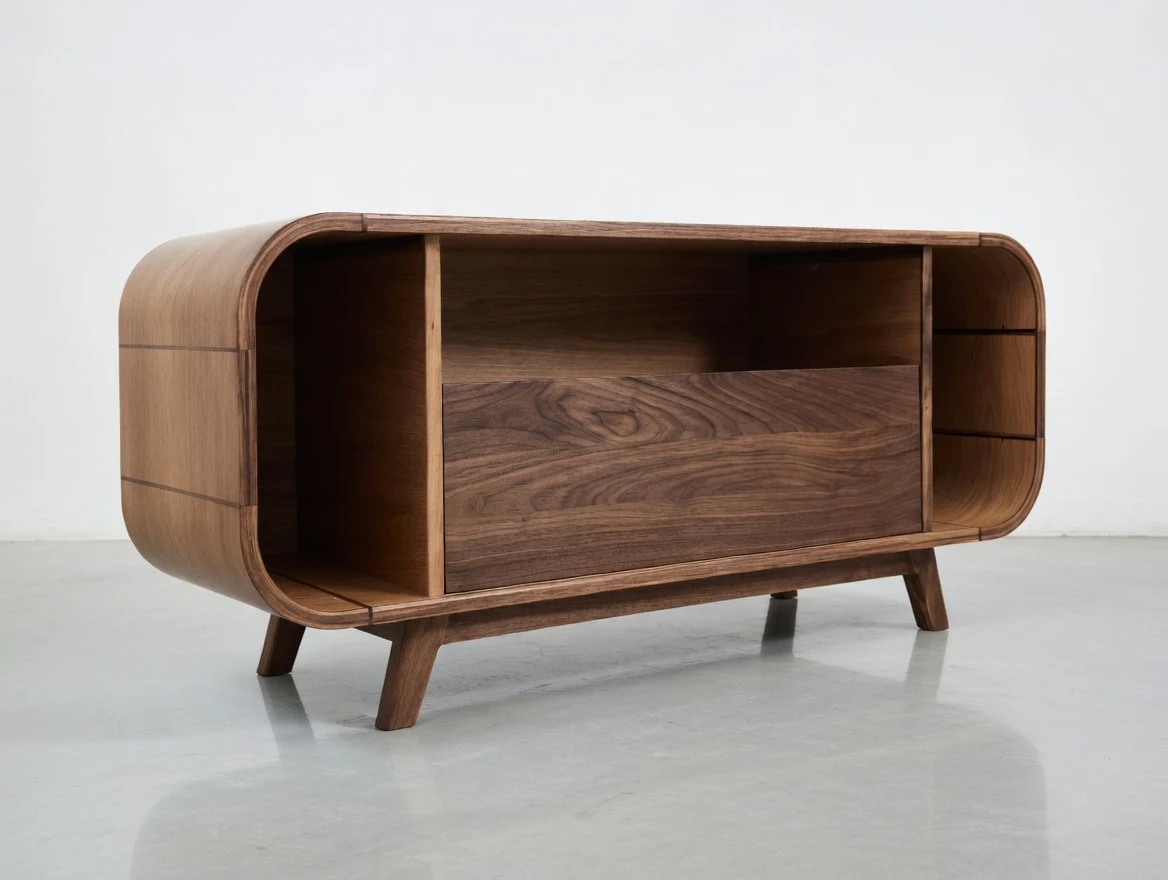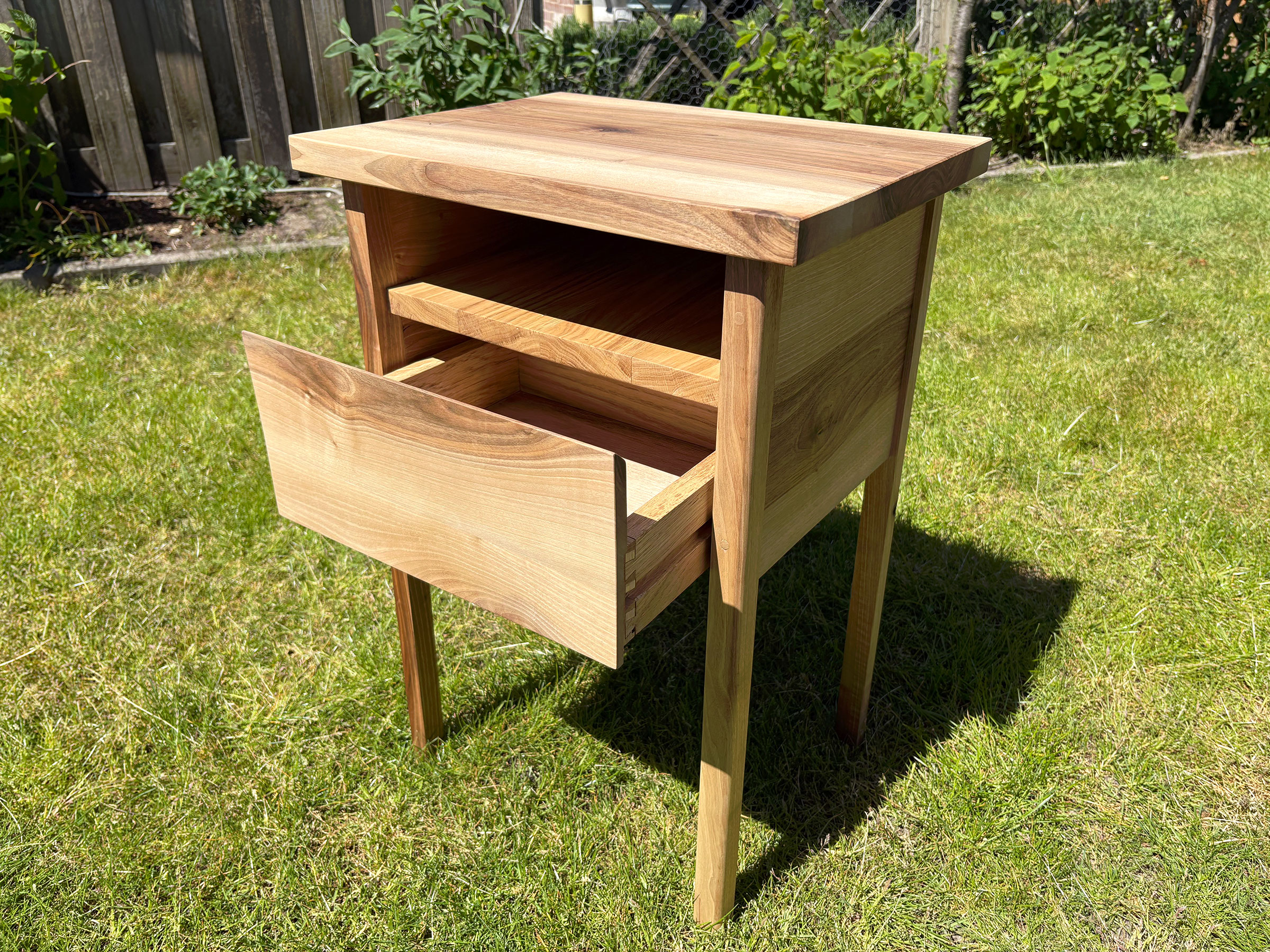
Radiator enclosure in solid oak
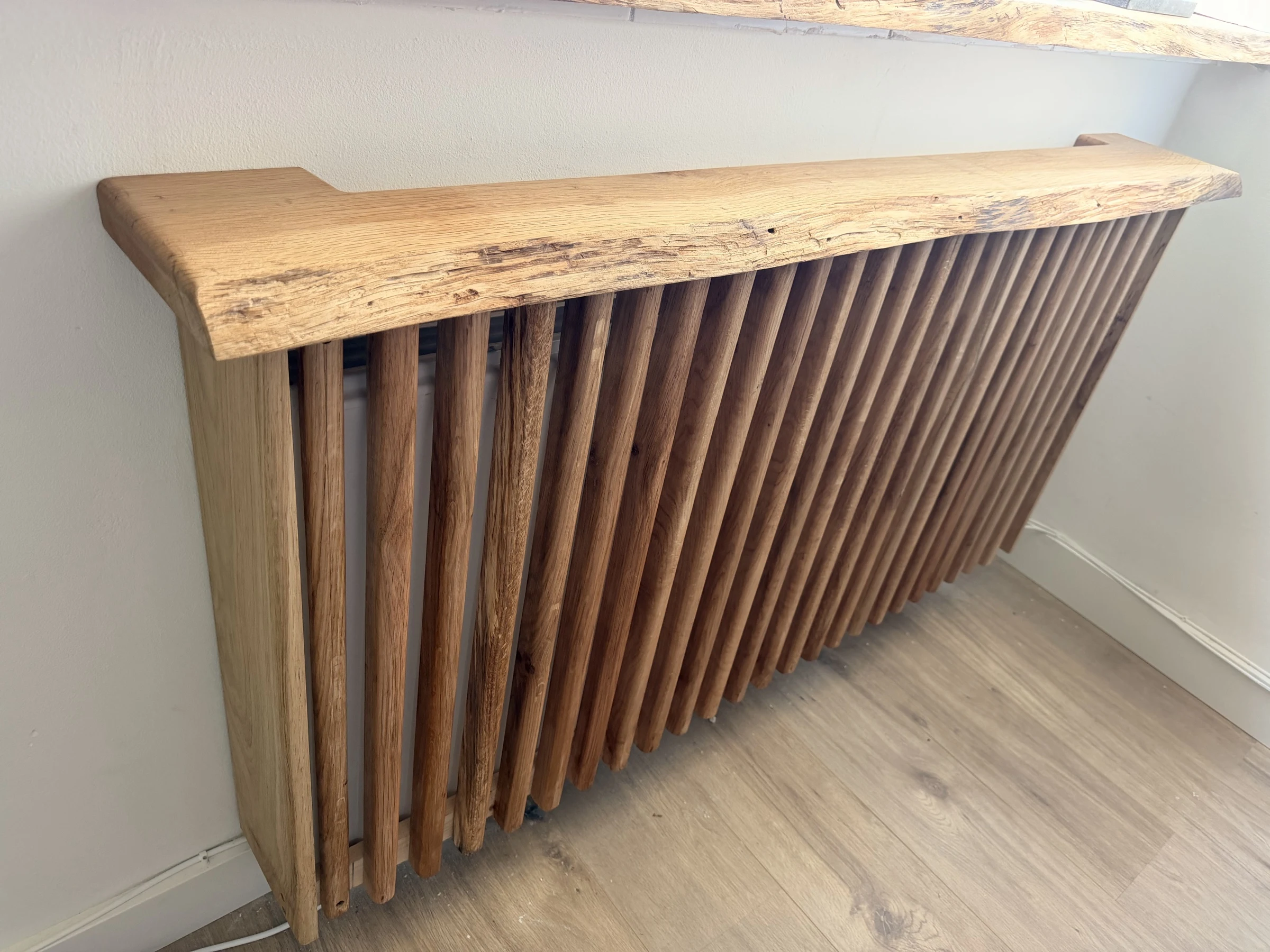
A bare radiator in an otherwise considered room does not fit. Cheap sheet material, triplex, exposed pipes. This solid oak cover changes that. Vertical 28mm spindles, a live-edge top and a hidden French cleat. The radiator gives warmth to the space even when it is off.
⤢ Enlarge
The radiator was already there. Cast iron, wide, hard to miss. Not something you want to look at from across the room, but not something you simply remove either. The goal was straightforward: make it visually quiet without compromising its function.
Design as hypothesis
The design started in Rhino. Vertical spindles for airflow, a concealed wall mounting, a solid oak top panel. The drawing was a precision exercise: 28 spindles at 28 mm diameter, 14 mm spacing, a top panel 44 mm thick with a ventilation gap at the rear. The model was correct. The workshop had other ideas.
What changed
The ventilation gap moved from the centre of the top to the rear. The panel now stops 30 mm short of the wall; that rear slot is the gap, invisible from the front. As a result, the top became its own object: a live-edge slab, 44 mm thick, almost a window ledge.
The spindles changed from square to round. Round oak cylinders, 28 mm diameter, fixed with horizontal screws from the rear of the support rails. No fixings visible from the front. The structure is hidden.
The wall mounting is a 45° French cleat. The design specified 25°; 45° is more stable and easier to level on site. The enclosure had to hang 25 mm higher than planned to allow drilling access above the radiator. That difference is visible at the bottom. Acceptable for now; something to design around earlier next time.
Material as decision
Visible surfaces in solid oak, hidden structure in stable construction timber. That division is a principle: it keeps costs manageable without compromising appearance. Oak side panels at 22 mm, top panel at 44 mm. The difference in thickness gives the object its weight.
The result is less technical than the design. The radiator disappears. The wood stays. More on the build process in the journal post.
Rotate and zoom with mouse or finger — the object is fully interactive.